
Hippotherapy is a therapy-based intervention conducted by licensed professionals such as physical therapists, occupational therapists, or speech-language pathologists.
The movement of the horse is used as a treatment tool. The therapist directs the horse handler and sidewalkers to adjust the horse’s gait and direction to achieve specific goals, such as improving posture, balance, coordination, speech, or sensory processing.
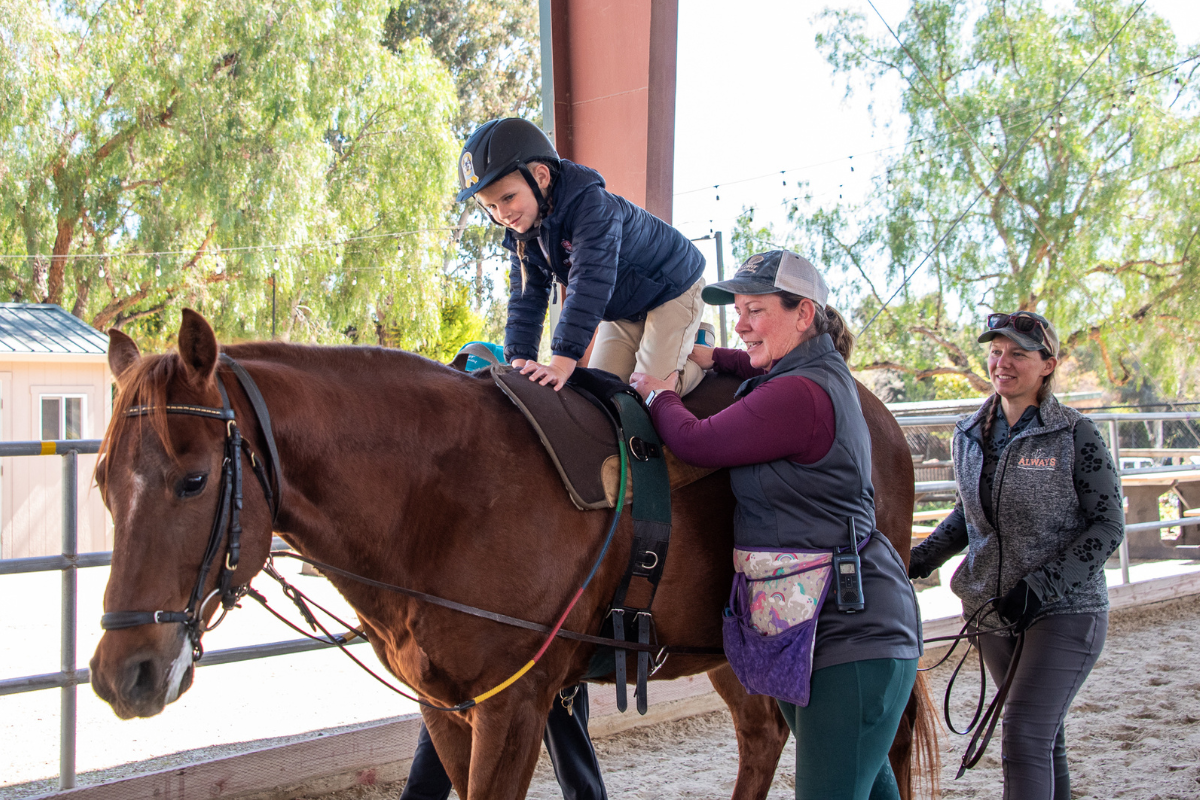
Benefits of Hippotherapy
- Improves core strength and postural control
- Enhances balance and coordination
- Supports sensory integration
- Improve speech and communication
- Provides input that is difficult to replicate in a clinic setting
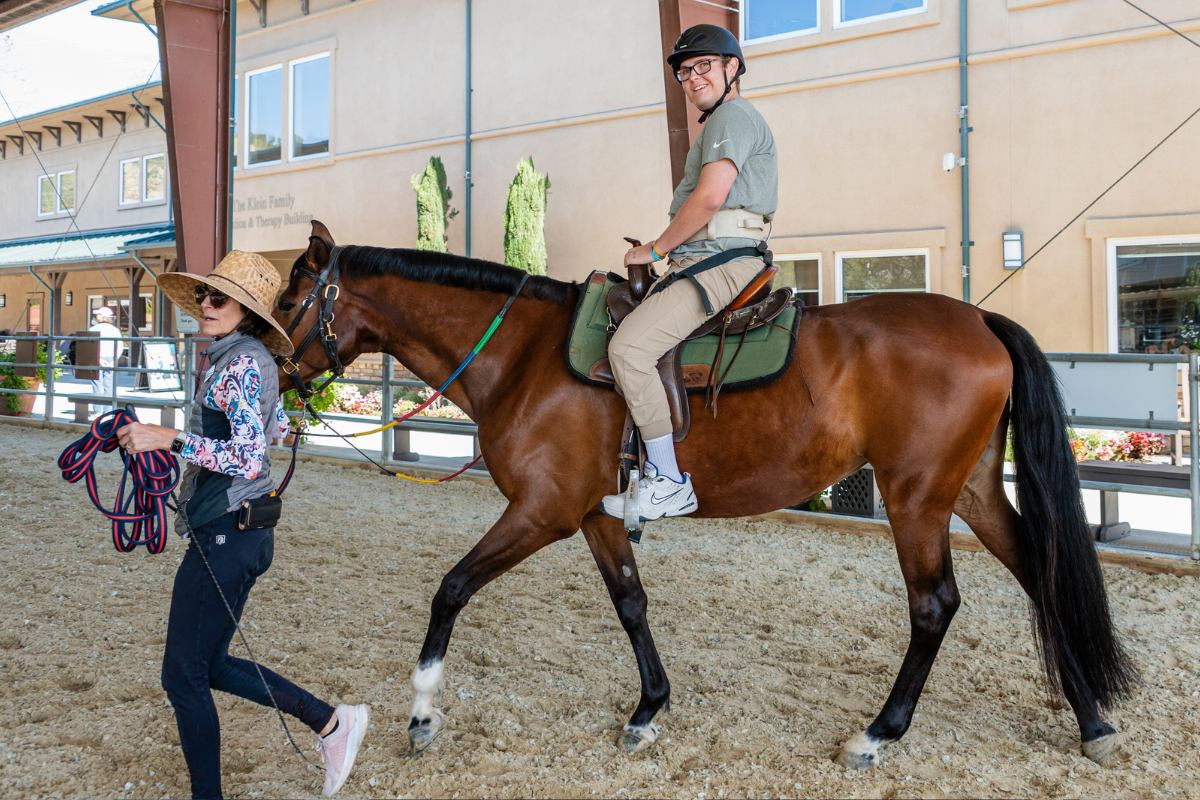
Adaptive riding is an activity adapted to meet the needs of individuals with physical, cognitive, or emotional challenges. It is taught by certified instructors rather than medical professionals.
In adaptive riding, participants learn horsemanship and riding skills in a safe, supportive environment. Lessons are tailored to each rider’s abilities and offer meaningful physical, emotional, and social benefits.
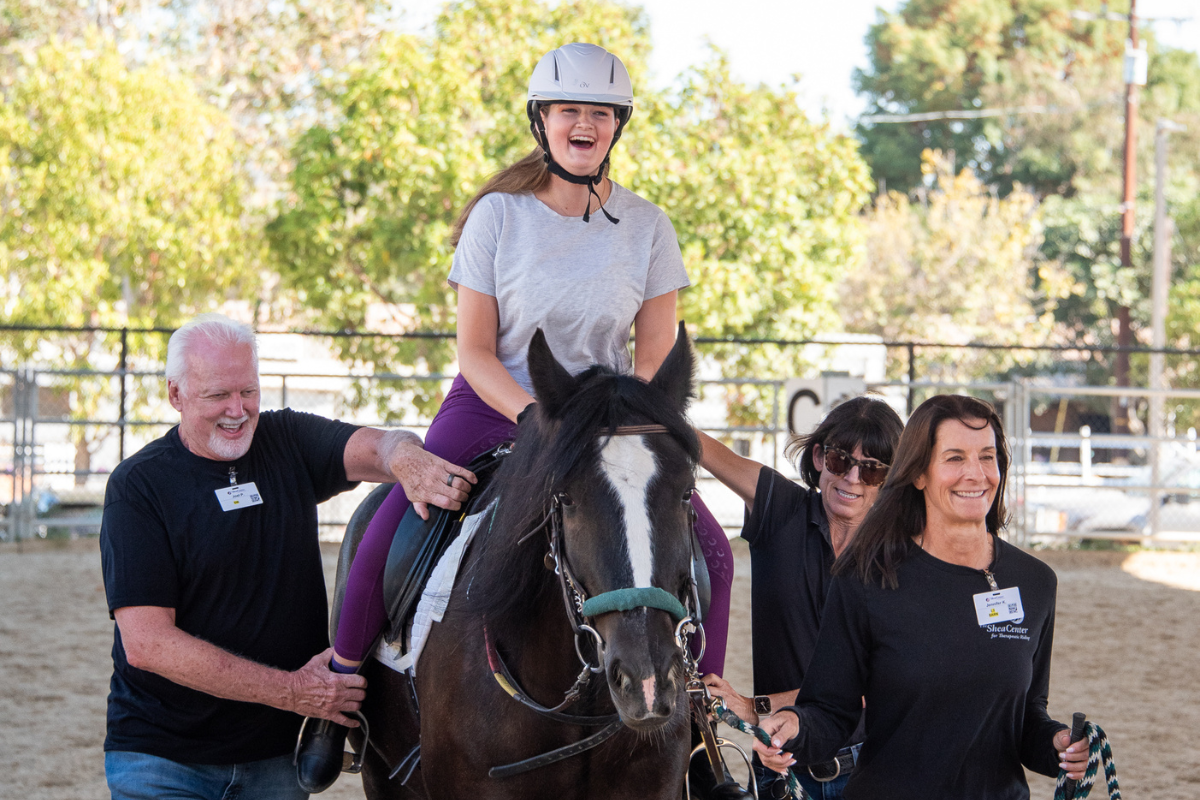
Benefits of Adaptive Riding
- Builds confidence and independence
- Develops riding and horsemanship skills
- Improves balance, coordination, and muscle tone
- Encourages social interaction and communication
- Provides a sense of accomplishment and joy
A participant may begin with hippotherapy to address foundational physical or sensory needs, then transition into adaptive riding to build skills, confidence, and independence.