
by Matt Mitchell, PT, DPT
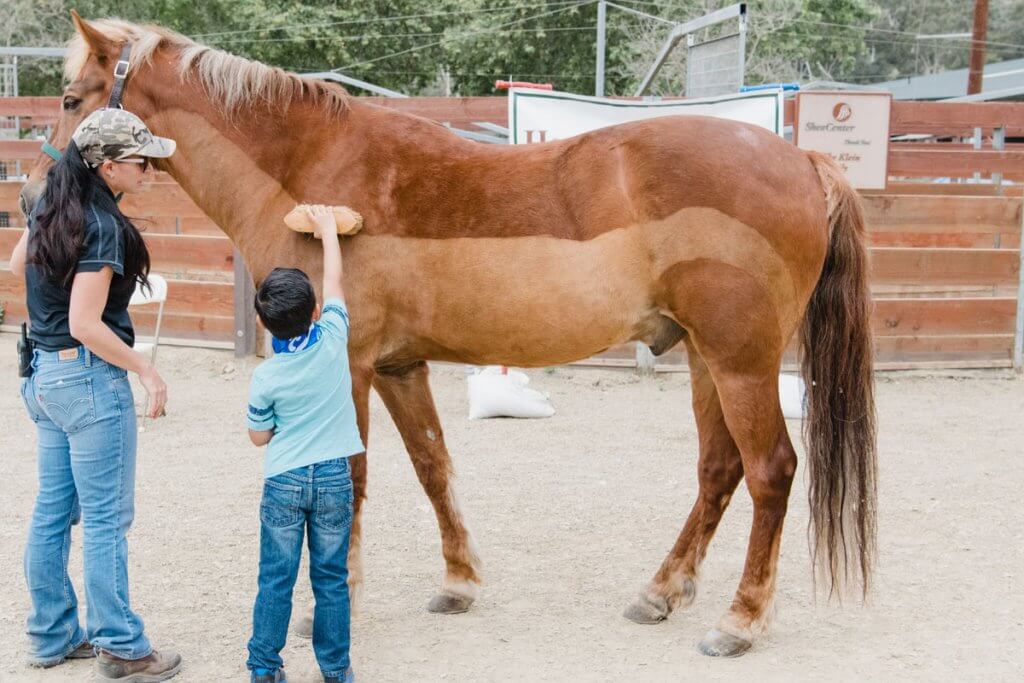
Autism Spectrum Disorder (ASD) is the number one diagnosis of the clients at The Shea Center. Our team of therapists and adaptive riding instructors strongly believe in the effectiveness of using riding instruction and therapy using equine movement to improve our client’s lives. We regularly witness great personal achievements of our clients who have autism when they ride or interact with our horses. They build bonds with the animals, develop empathy, improve motor control, and develop sensory integration among many other skills. Many studies have emerged that investigate the effects of equine-assisted interventions on children with ASD. These studies emphasize why our approach works and why the horse is such a powerful tool and companion.
A Broad Look at The Research
One systematic mapping review (a type of study that collects all existing research on a specific topic and analyzes them as a unit) found that equine assisted activities specifically help to improve behavior, social interaction, communication, and motor control1. Empirical investigation of equine assisted interventions for people with ASD began relatively recently with the first study noted to be published in 2003. Since that original study, a multitude more have emerged throughout 25 different journals representing 12 countries. Peters’ 2017 systematic review included a total of 17 studies investigating adaptive riding and five studies investigating hippotherapy (HPOT) and their effects on children with ASD published between 2003 and 2015. These studies investigated the effects of animal assisted activities and therapies on individuals with ASD. Let’s take a look at some of the interesting findings that came from that compilation of research.
Sensory System
One study found that “Horses may help organize or provide input to the ASD child’s sensory system. This factor may contribute to helping the child feel calm”2. Many children with ASD have difficulty processing sensory inputs leading to self-stimulatory or sensory avoidant behaviors. The movement, warmth, and texture of the horse can help children meet their sensory needs.
Motor System
Another study showed that, “Improved motor skills as a result of HPOT helped children perform more independently in everyday activities.”3. HPOT is commonly used by therapists to meet functional movement goals. The repetitive, symmetrical balance challenges provided by our talented equine partners create a fantastic way to build functional motor skills such as sitting independently, ball skills, and much more.
Responsibility
Another study interviewed parents of children with ASD and found that their children had “an easier time at school, much more interaction with peers, and paying attention to consequences of behavior.”4.
Engagement
One final study found that seven out of seven children included in their study made significant “improvements in proportion of time engaged in activities during equine-assisted occupational therapy sessions compared with baseline”5. Engagement is essential for learning new skills and building social interaction.
- McDaniel Peters BC, Wood W. Autism and Equine-Assisted Interventions: A Systematic Mapping Review. J Autism Dev Disord. 2017;47(10):3220-3242. doi:10.1007/s10803-017-3219-9
- Gabriels RL, Agnew JA, Holt KD, et al. Pilot study measuring the effects of therapeutic horseback riding on school-age children and adolescents with autism spectrum disorders. Res Autism Spectr Disord. 2012;6(2):578-588. doi:10.1016/j.rasd.2011.09.007
- Ajzenman HF, Standeven JW, Shurtleff TL. Effect of hippotherapy on motor control, adaptive behaviors, and participation in children with autism spectrum disorder: A pilot study. Am J Occup Ther. 2013;67(6):653-663. doi:10.5014/ajot.2013.008383
- Erdman P, Miller D, Bulletin SJ-H-AI, 2015 undefined. The impact of an equine facilitated learning program on youth with autism spectrum disorder.
- Llambias C, Magill-Evans J, Smith V, Warren S. Equine-assisted occupational therapy: Increasing Engagement for children with autism spectrum disorder. Am J Occup Ther. 2016;70(6). doi:10.5014/ajot.2016.020701