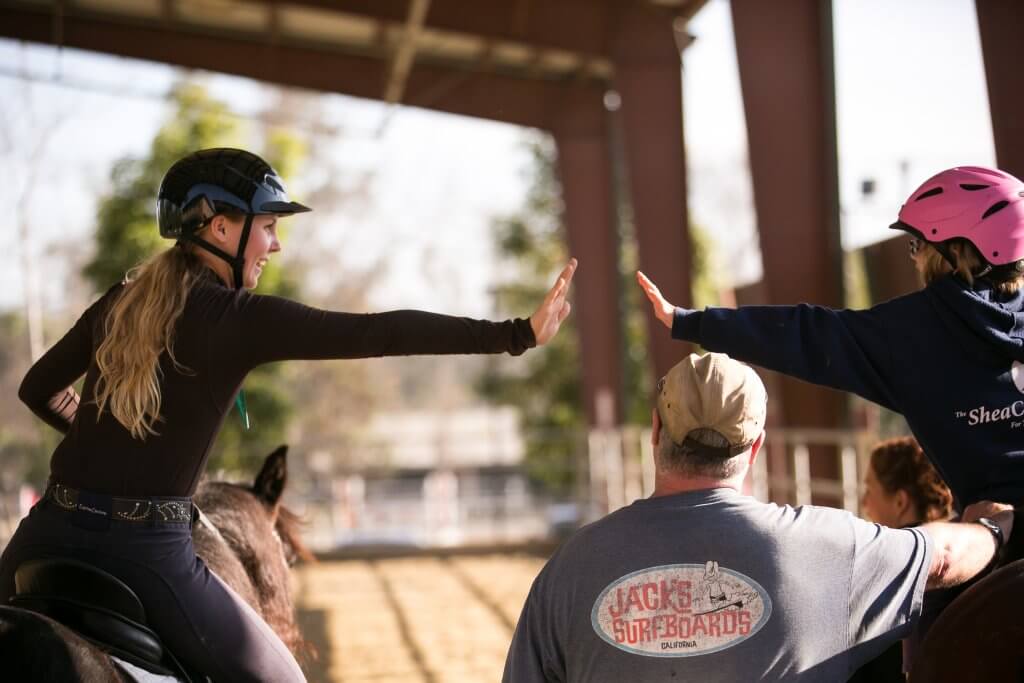
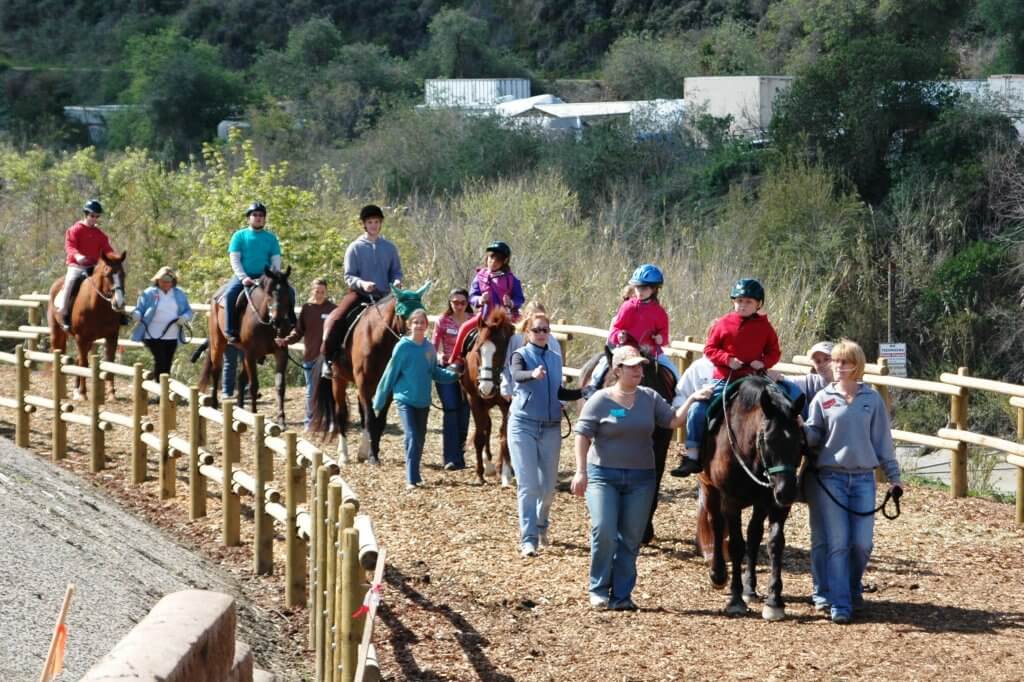
At The Shea Center, some of our clients ride in group lessons on the Therapeutic/Adaptive Riding side of our program. These Shea Center group lessons are taught by specially trained adaptive riding instructors and can have up to a maximum of four riders in the lesson. The riders are often grouped together based on similar age, riding ability level and personality. These group lessons offer many benefits to the rider including:
1. Social Skills
Group lessons foster social interaction with fellow riders. They are specifically formed around the riders’ ages, abilities, and riding goals. This gives group lessons a perfect opportunity for riders to make new friends and learn crucial social skills. Group lessons often include games, drills, and riding activities that encourage communication with their peers. Adding these activities also brings an element of fun to riding, while the riders learn important social skills like turn-taking, teamwork, encouragement, and friendship.
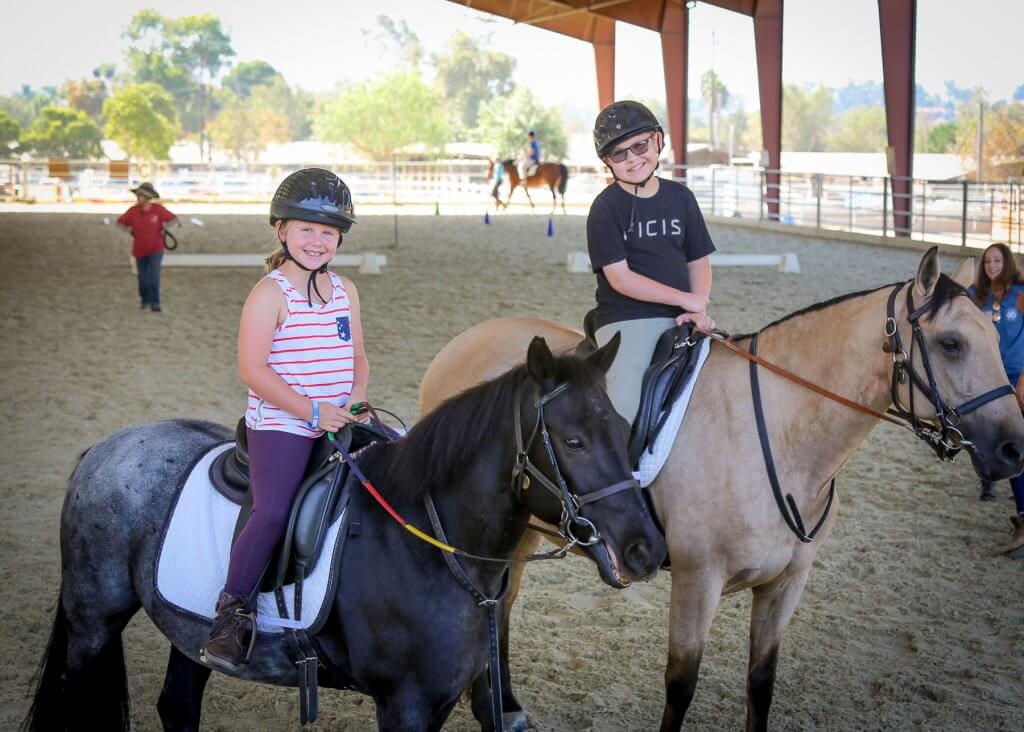
2. Mirrored Learning
Sometimes learning specific riding skills can be a challenge. Having group members in the lesson allows for visual examples and peer modeling for all riders involved. Riders are able to learn from each other and recognize areas where they may need some extra help.
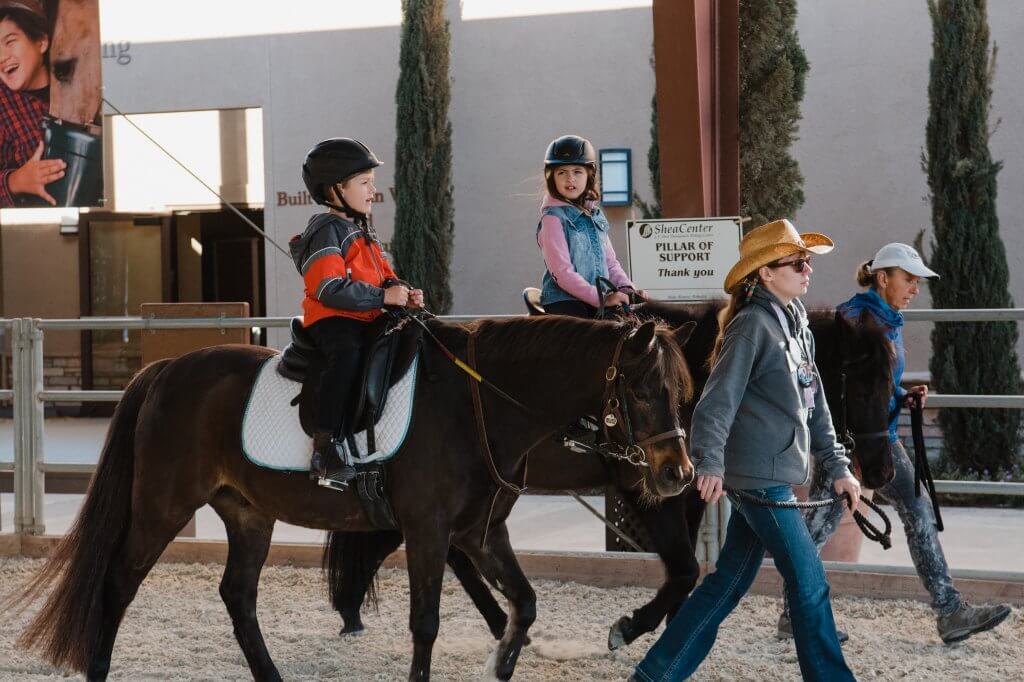
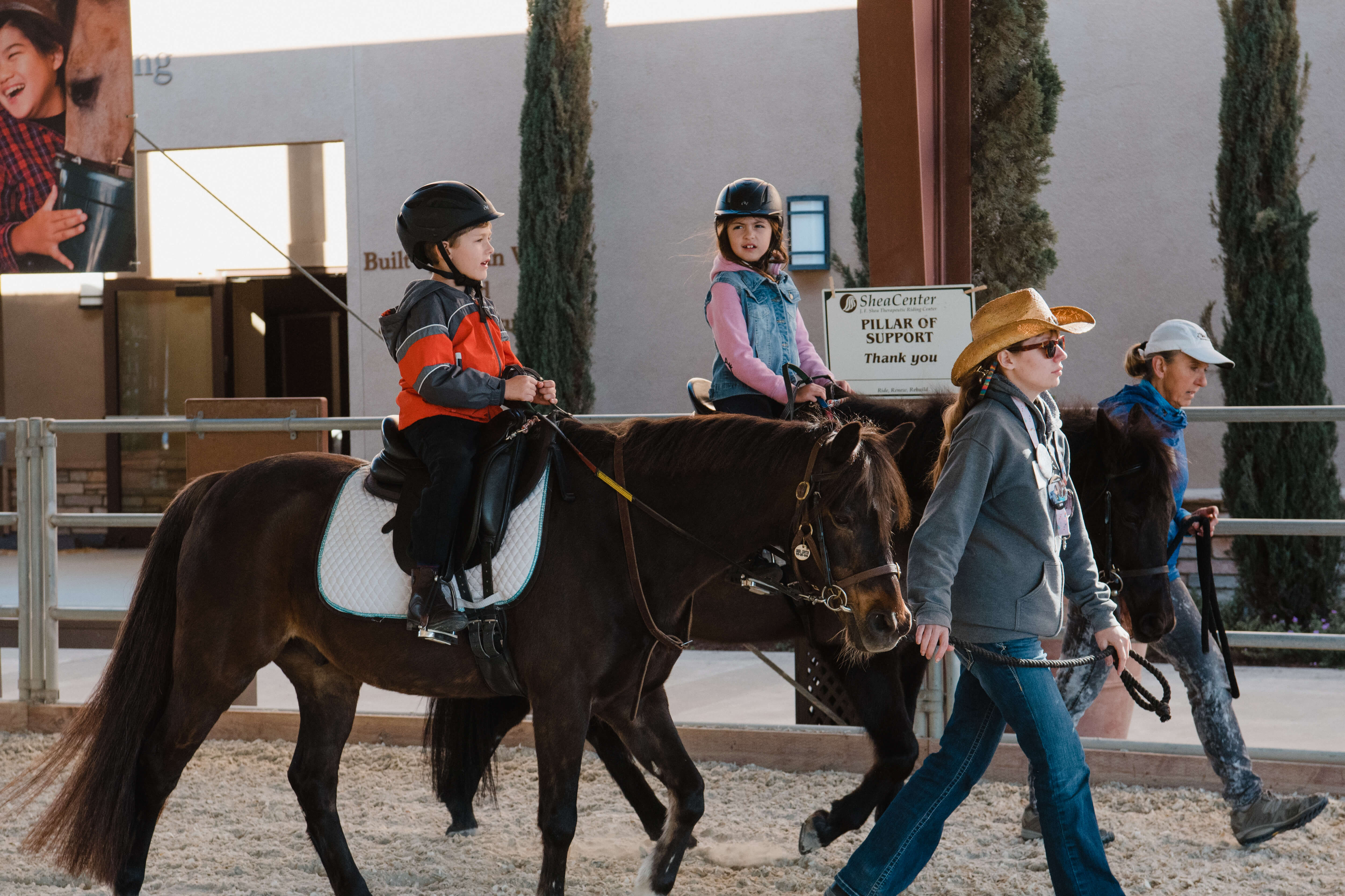
3. Show Preparation
Riding competitions often involve multiple riders in the arena. A flat class in a show can have multiple riders that are riding at the same time, demonstrating their skills, and performing specific riding patterns. In group lessons, riders are working together in one arena on common riding patterns. A rider learns to look out for the others in the arena, and to complete patterns while accommodating other riders in the ring. This helps promote control and focus.
4. Improved Spatial Awareness
Since there is more than one horse and rider in a group lesson, each rider must be aware of where he or she is at all times. Riders must make sure that they maintain a safe distance between their horse and the others in the class. In the arena, as riders become more independent and work on riding off lead or without a leader, they need to have good spatial awareness when circling their horses, changing directions, or riding more complex riding patterns. Improved spatial awareness not only helps riders to be independent in the arena, but also on trail rides.
5. Confidence
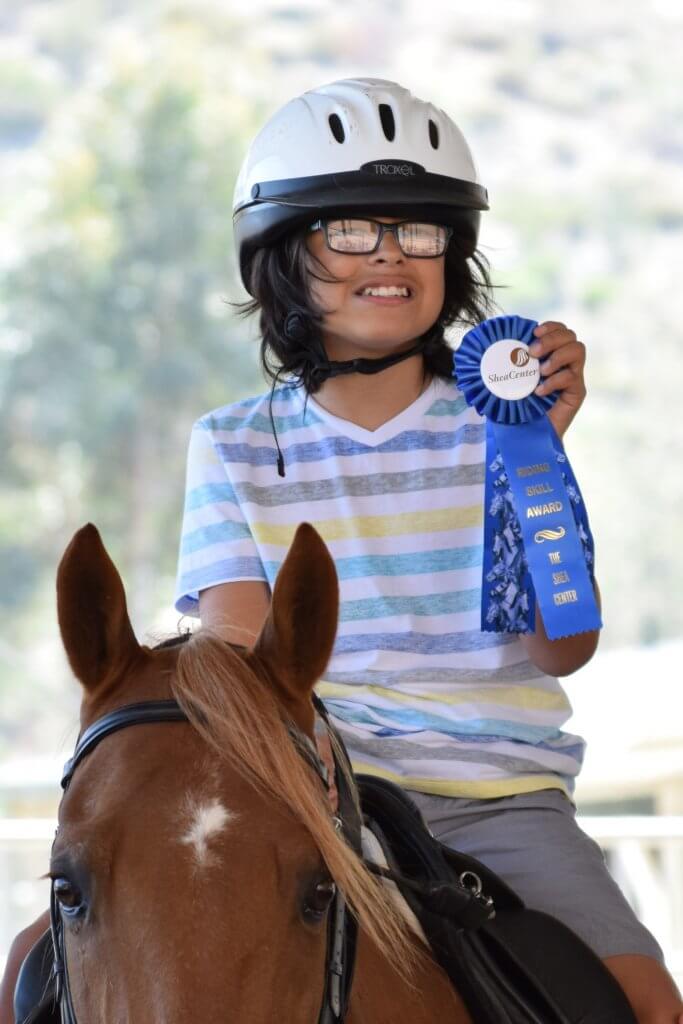
By riding with peers close to the same age and riding ability, riders are pushed to advance in their skills and try new things. Having other riders in the lesson provides all of the riders in the group encouragement and support on their riding journey. This fosters important feelings of accomplishment and confidence in riders. By improving riding abilities, and working together, riders are empowered in their independence. Group lessons establish positive patterns that build self-esteem in and outside of the arena.