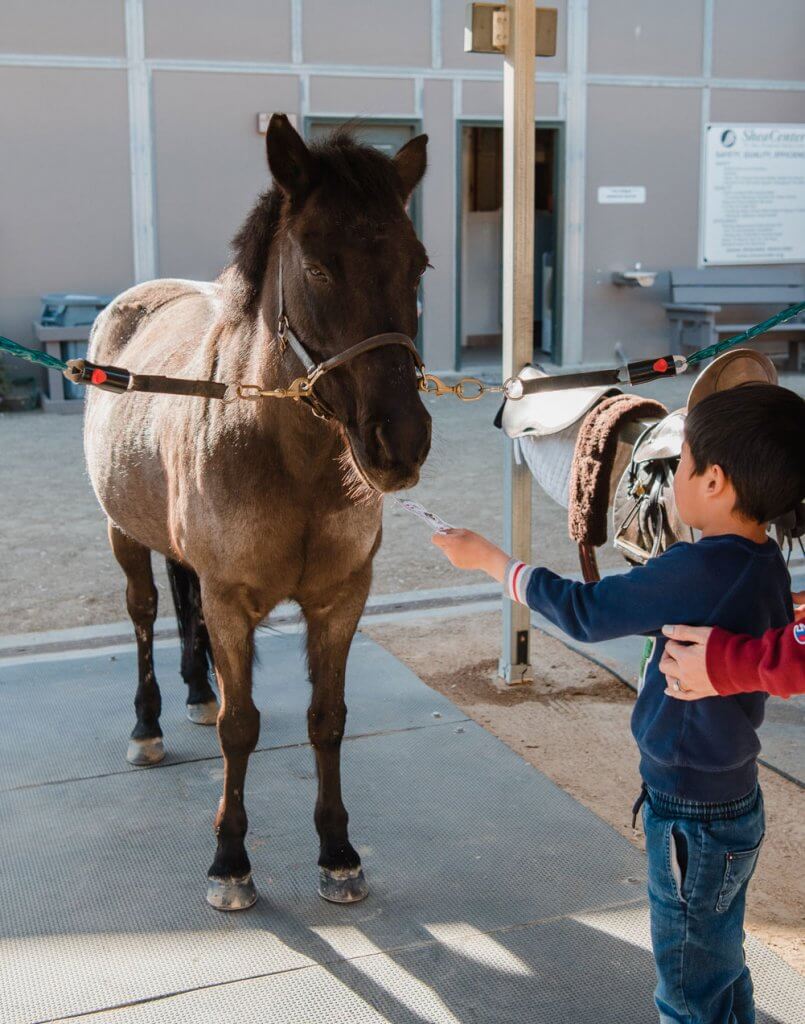
Why does a speech language pathologist (SLP), incorporate hippotherapy in practice? Equine movement is used to engage sensory, neuromotor and cognitive systems to promote functional outcomes in the area of communication.
Many patients I see who experience communication disorders have difficulty with sensory regulation and are consistently moving about the clinic room. These kids struggle to positively sustain attention to presented therapy tasks. This is often observed with children exhibiting symptoms associated with attention deficit disorders and autism spectrum disorders. Patients who have difficulty being able to attend to therapist directed activities, exhibit less progress. With these types of patients, the SLP can spend entire treatment sessions week after week trying to establish joint attention. The therapist needs to gain the patient’s joint attention so learning new communication skills can occur.
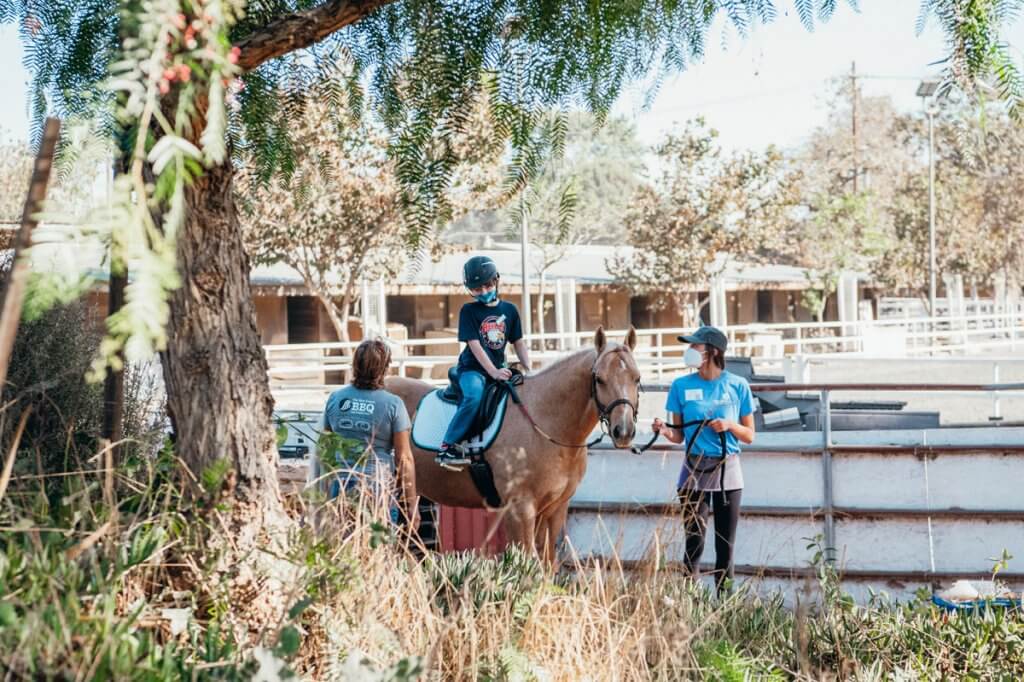
These speech therapy clients who commonly have difficulty with attention in the clinic receive between 2,500 to 3,500 neuro motor inputs via the three dimensional equine movement. This helps to wake up the patient’s sensory and cognitive systems and improves their ability to attend to therapist directed tasks. The patient is no longer seeking to move about the room and is now experiencing the purposeful equine movement; yielding improvements with positive attentional focus. It is then possible to more effectively engage the patient with purposeful intervention techniques that are often used in a clinical setting.
A client who has limited success in a clinical setting, where the patient struggles to attend to structured intervention tasks, and is expected to sit at a table or on a mat, will likely benefit from using hippotherapy. This tool offers both a dynamic and static surface that can be manipulated to increase positive therapeutic outcomes.
Once the patient’s attention is gained with the help of purposeful equine movement, the SLP can then overlay traditional intervention strategies while the client is mounted. The strategic options are endless. Language based intervention can be incorporated using all sorts of toys, manipulatives, literacy activities, targeted articulation/phonologic intervention, semantic training, as well as comprehending and executing multi-step instructions.
One of the best aspects of speech therapy treatments that incorporate hippotherapy is that patients do not realize its therapy! They show improved engagement because they are having fun on a horse.
Terri Hutchison M.A., CCC-SLP
Speech Language Pathologist