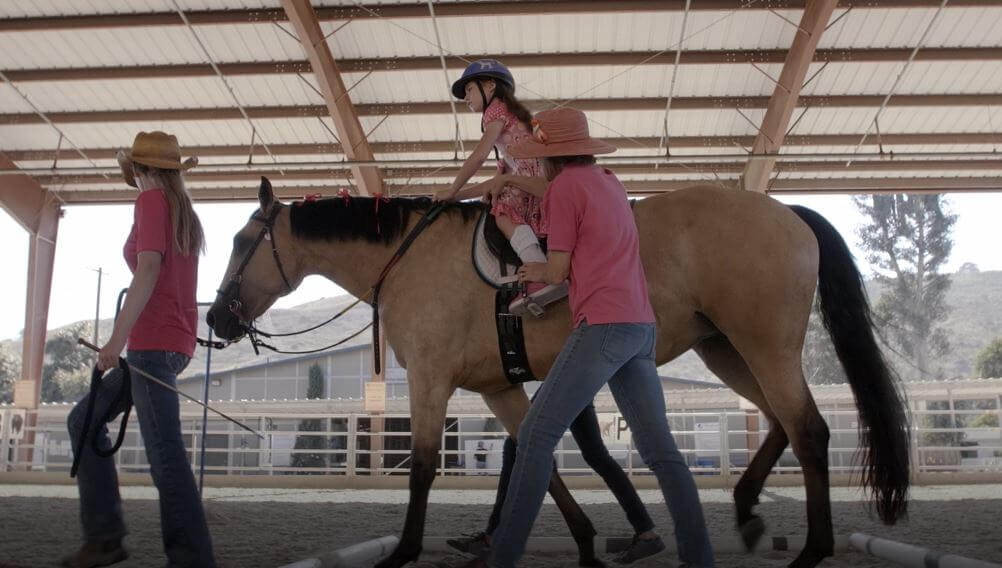
At The Shea Center, our therapeutic/adaptive riding program hosts a wide variety of clients with many different ability levels. The main goal is to learn safe riding skills, which create independence and promote cognitive, physical, and social development. All aspects of the riding lesson need to come together to ensure the rider is comfortable and safe. The choice of horse and equipment is crucial to assure our clients have the best possible riding experience.
Horse Shape and Build
In an adaptive riding lesson, the instructor’s first action is to choose the correct horse for the client. The choice of horse is important because the horse’s movement, temperament, and body type affect the rider’s position and comfort. For example, riders with cerebral palsy may have tight muscles making it difficult for them to stretch their legs far apart on a horse. A narrower horse would help the rider feel more comfortable. For a rider that may have some hesitation, anxiety, or fear, a wider horse may give him a better base of support and make him feel more secure and safe. For a rider that has high sensory needs, a horse with a big forward walk and swinging movement might provide the client more stimulating input. A rider who is fragile or has low core muscular strength might need a horse with a smooth and steady walk. It is important to correctly pair the horse and rider to maximize comfort and support the needs of the rider.

Horse Temperament
All of our horses have individual characteristics that make them great equine partners for particular clients. Our clients place their trust in our horses and it’s important to cultivate a caring bond between the horse and rider. A horse’s temperament is an important factor in choosing a horse for a rider. The instructor will often use the temperament of the horse to teach riders new skills. For example, a rider who is working on cueing the horse forward with calm hand and leg movements could learn the correct amount of touch needed by working with a horse that is sensitive to these cues. A rider who is still building confidence in his/her balance may benefit from a horse that is docile and easygoing.
Horse Tack
Tack refers to the equipment used in horseback riding. This includes, but is not limited to, the saddle, bridle, saddle pad, reins, and stirrups. Tack selection plays an important role in making sure the rider gets the maximum benefit from adaptive riding. The Shea Center has a wide range of equipment that allows riders of many body types and abilities to maximize their learning. For riders who have limited mobility in their arms and hands, generic riding reins may limit their ability to steer the horse. Ladder reins or handle reins may be a better option for these riders because they allow riders to communicate with their horse by neck reining while maintaining their independence.
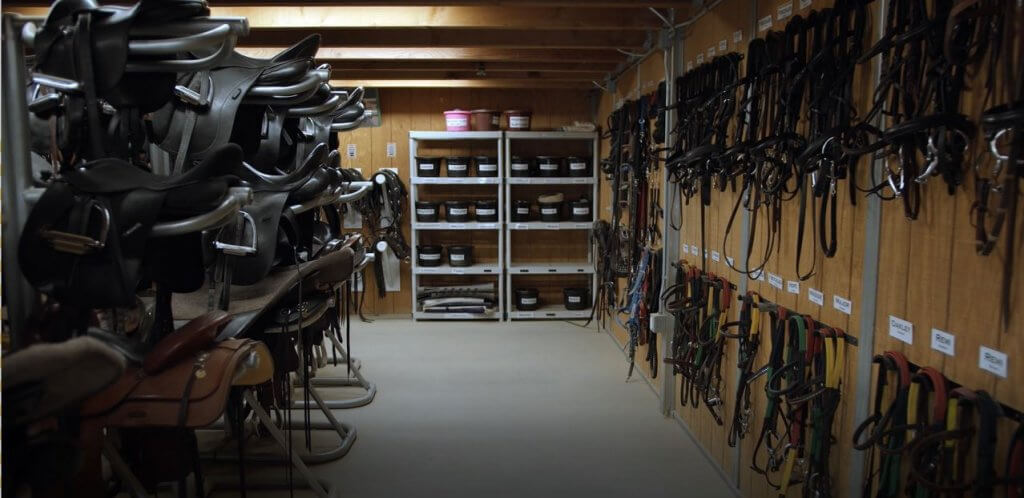
Saddles range in size and style and can often change the position of a rider. Western saddles position a rider’s pelvis in a posterior pelvic tilt. This means that the front of the rider’s pelvis rises and the back drops. For some riders, this position may be more comfortable than the opposite, an anterior tilt. In an English saddle, most riders ride with an anterior tilt where the front of the pelvis drops and the back rises, lengthening the hip extenders and creating a straightened position in the spine.
The choice of horse and tack plays a large role in the safety, comfort, and strengthening in adaptive riding. Having a depth of disability education allows instructors to better know how to help their clients.