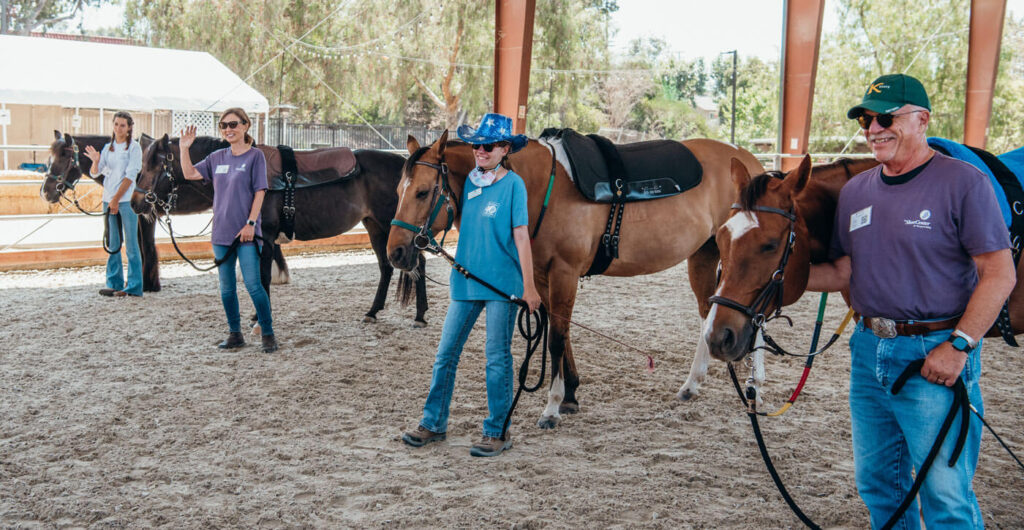
The Shea Center horses and ponies serve more than 250 clients during each session in our therapeutic riding programs.
- Each horse has its own diet consisting of Alfalfa and Timothy hay and fresh water.
- The horses are fed three times daily and given carrot or apple snacks if their diet permits.
- Each horse has its own exercise program.
- The horses are turned out and they also walk in a motorized Euro walker, which keeps them moving continuously for 20 minutes.
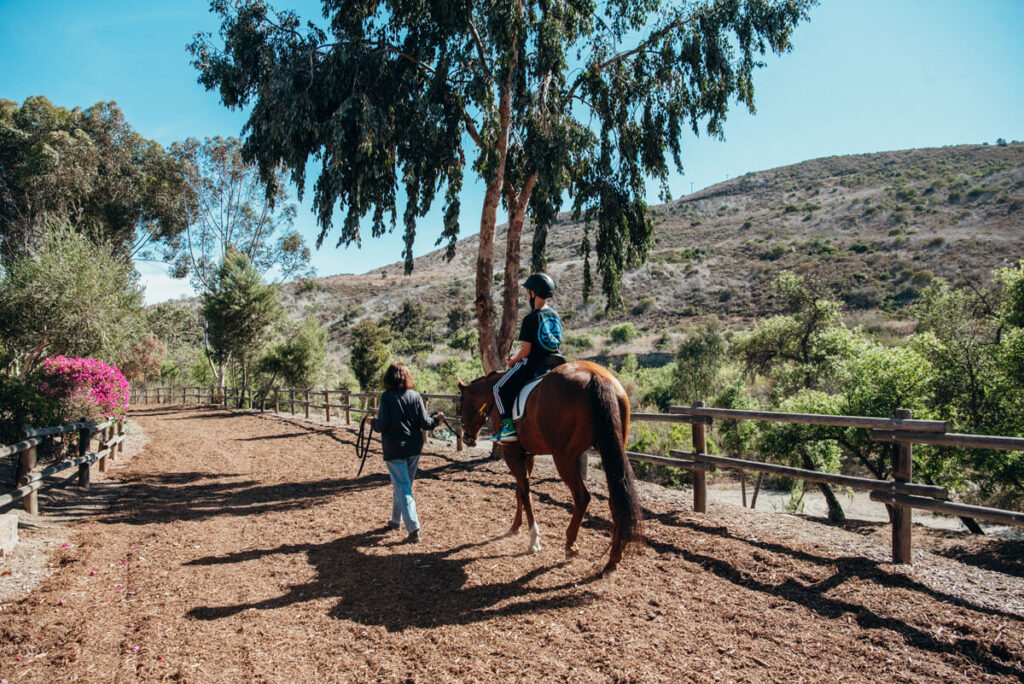
- The horses go on trail rides with the clients on a Shea Center-maintained trail behind the barn.
- Every ten weeks, during session breaks, the horses have two weeks off. During the second week, they return to their exercise/training schedule.
- The horses are continually schooled by the staff to keep them fit and healthy for their jobs.
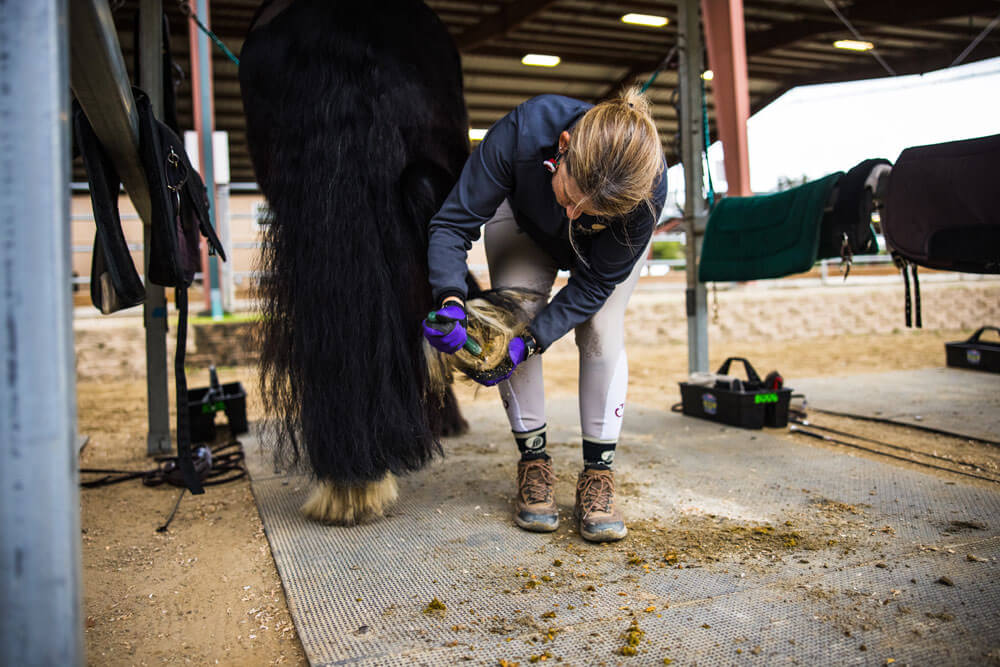
- Each horse has its own tack and grooming equipment to ensure proper fit and comfort.
- The horse stalls are 12’ x 24’ to allow the horses plenty of space to move around and are open at the top to give the horses an opportunity to interact.
- The stall floors are made of a 3-layered foam material for the comfort of the horses’ joints. The stalls are cleaned twice each day and the stall waterers are cleaned daily.
- The floor shavings are changed daily.
- The horses are seen by an equine dentist twice each year. The services are donated by Larry Kelly, DVM.
- As needed, some of the horses receive massages by equine massage therapist Sue Graf, ESMT
- Equine veterinarian services are donated once each week by Richard Markel, DVM.
- Farrier (horseshoeing) services occur every eight weeks at a reduced rate by farrier Rick Rabin. Farrier services for horses with unusual needs are performed by farrier Vic Sebring at a reduced rate.
- The horses are groomed every day and some are shaved in the winter due to the heavy coat of the breed. Shaving keeps the horses from overheating during work.
The total cost to care for each horse for one month is $1,000.